main header picture main header picture

Identity

Established in 1991

Christian Liberal Arts university, established by a joint venture of Lithuanian, Canadian and American foundations. 

MISSION STATEMENT

LCC International University provides Christian liberal arts education within a diverse learning community that transforms people for servant leadership.

VISION STATEMENT

To be the leading Christian liberal arts university in Europe, renowned for its flourishing academic community, spiritual vitality, and global impact.

Read more about LCC
NORTH AMERICAN

education style

LIBERAL ARTS

philosophy

Christian

values and worldview

2,500+ Alumni

alumni since 1991

Our partners

See all >

Distinctives

Christian

We confirm the identity of LCC as a Christian university.

Liberal Arts

We emphasize eight core competencies: critical thinking, conflict transformation, multicultural perspective, effective communication, Christian worldview, servant leadership, multidisciplinary knowledge and community building. Our definition of liberal arts education takes into account quantitative diversity of course work, but further emphasizes the importance of student self-transformation.

International

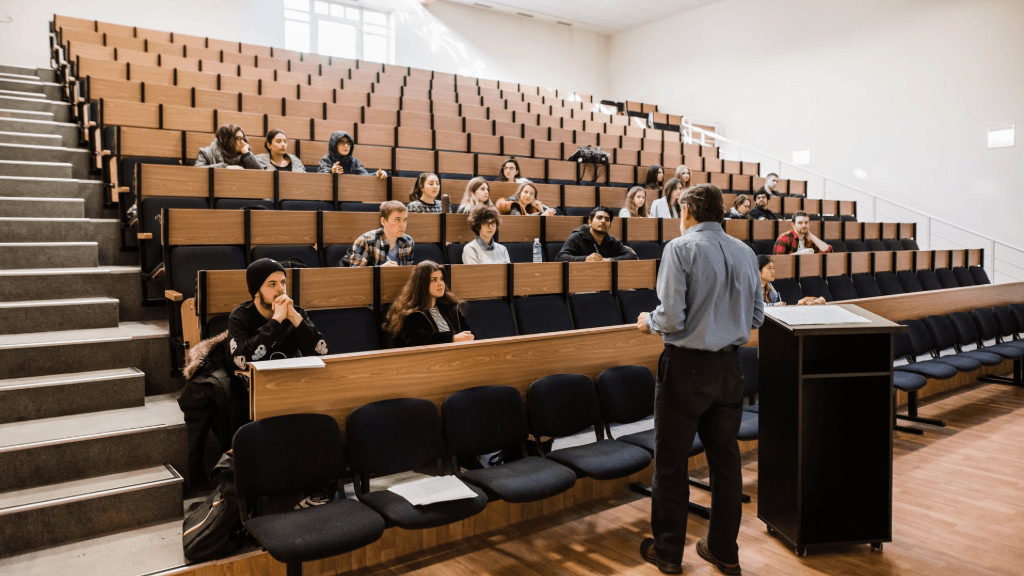
We confirm our identity as an international university, with student and faculty/staff diversity. The international distinctive is mirrored in our program content, teaching approach and student life programming.
Peacebuilding

We cultivate a culture of peacebuilding at LCC, equipping students to promote justice, resilience, and reconciliation.

North American Style

An integral part of  LCC's uniqueness is  providing a North American style of education, but in the region of Eastern Europe.

Relational

LCC is a relational university. We believe that student transformation takes place within the context of community and one-on-one relations.

Philanthropic

A philanthropic identity is central to the life and mission of LCC. Indeed, we are global citizens who share a responsibility to collectively care for people in need.

Strategic Plan 2024-2029

A Bridge-Building Community (Executive Summary).

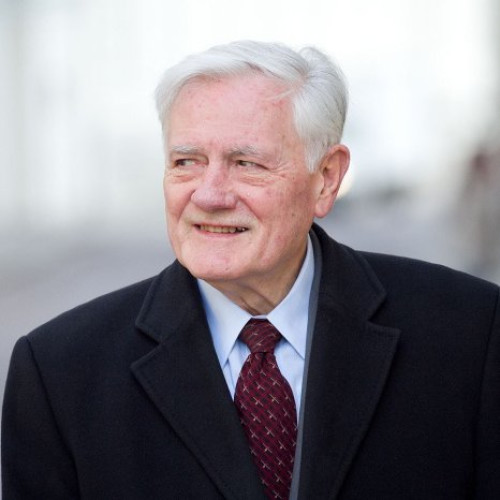
“VALUED IN LITHUANIA
AND ABROAD”

“LCC is not only an example of personal initiative to a lot of academic institutions and young people, it is a high quality university, connecting both Christian principles and openness in society. The best evidence of that are LCC alumni, who are welcomed and valued both in Lithuania and abroad, and faculty from North America, who find a mature and bright audience filled with youthful courage at LCC International University.”

a photo of person or place for the testimony

Valdas Adamkus
President of Lithuania
From 1998 to 2003 and 2004 to 2009

Quality Assurance

BA & MA PROGRAMS

LCC International University offers accredited Bachelor's and Master's programs in social sciences and humanities recognized by The Republic of Lithuania. See full list of all accredited institutions in Lithuania.

EXTERNAL EVALUATION

LCC received a positive external evaluation in 2016. The review process included an institutional self-report and a site visit by international experts which happened in November, 2015.

Read about quality assurance >

News and Events

A photo for this news article
Life After LCC — 35 Years, 35 Stories: Lika Beradze

2026-02-03

LCC Alumni Story: Lika Beradze, from Georgia, Class of 2023, major in International Relations and Development Life After LCC is a monthly interview and story series featuring alumni of LCC International University. The series is part of 35 Years – 35 Stories, celebrating the university’s 35th anniversary.  Tell us about your current role or project. Where are you now?  After completing my BA in International Relations and Development at LCC International University, I went on to pursue an MPhil in Politics and International Studies at the University of Cambridge. Following my graduation from Cambridge, I returned to Georgia with the intention of contributing to public-sector development and applying my academic training in a policy-oriented environment. I most recently worked as a Project Manager at a government organisation focused on regional tourism development. In this role, I coordinated and implemented tourism initiatives in the Imereti region, including the organisation of festivals, training programs, and development projects aimed at increasing both local and international engagement. A core aspect of my work involved close cooperation with international partners, particularly GIZ (the German Agency for International Cooperation), through locally funded regional development projects. My responsibilities included preparing quarterly reports, ensuring the accurate and timely preparation of grant documentation, and supporting public procurement processes through tenders. Having gained valuable experience in a smaller public institution, I am now actively seeking a more dynamic professional environment that offers broader exposure, faster-paced project implementation, and deeper engagement with international partners.  What experiences at LCC brought you to this current point?Being part of a truly international community exposed me to diverse perspectives and cultures, helping me develop strong intercultural communication skills and an openness that continues to influence my work today. Beyond the classroom, LCC actively encouraged student engagement through conferences, workshops, and training opportunities, allowing me to connect academic learning with hands-on international practice.The quality and diversity of the faculty at LCC played a vital role in my development. Many of my lecturers were professionals and academics from around the world who brought their practical experience into engaging, discussion-based lectures. LCC’s liberal arts model allowed me to broaden my academic focus beyond my core discipline. While studying International Relations and Development, I intentionally focused my electives on economics and psychology to better understand the multifaceted foundations of politics. This interdisciplinary and skills-based education, combined with firsthand experiences and various extracurricular activities, provided a strong foundation for my graduate studies and subsequent work in the public sector.Additionally, LCC placed a strong emphasis on ensuring that students graduate with real professional experience through practicum courses and numerous on-campus work opportunities. For instance, during my senior year, I worked as a Research and Administrative Assistant with Professors Kirk Lougheed and Michael Cox, an experience that provided me with valuable insight into academic research. LCC teaches you not only what to study, but also how to grow into the professional you aspire to become.How did LCC influence your choice of profession or career direction? When did you realize what you wanted to do professionally?I have always been motivated by a strong desire to contribute to politics and to the improvement of democratic governance in Georgia. However, it was during my time at LCC that this interest evolved into a clear and concrete career direction. Studying in an international academic environment reinforced my awareness of Georgia’s historical and contemporary challenges as a post-Soviet state and strengthened my commitment to contributing professionally to its development. My career aspirations became clearer through a combination of academic exposure and practical engagement, both encouraged by LCC. Volunteering with the Red Cross Society and the Ukraine Care Initiative, as well as completing an internship with a legal counselling NGO in Georgia, allowed me to interact directly with people affected by social and political challenges and to act as a bridge between communities and institutions. These experiences, supported by LCC’s strong focus on civic engagement, helped me realize that I wanted to work at the intersection of politics, civil society, and international cooperation, where policy decisions have a tangible societal impact. Research methods courses and my undergraduate thesis on migration further confirmed my interest in political research and policy analysis, ultimately leading me to pursue an MPhil in Politics and International Studies at the University of Cambridge, where I focused my research on state energy security.  How did LCC help you grow as a leader? Tell us about your leadership experience.  LCC played a significant role in helping me grow as a leader by providing both structured leadership training and meaningful mentorship. Through LCC’s Leadership Development Program, I was encouraged to reflect on my leadership style, take responsibility, and work effectively within diverse teams. LCC’s international environment further shaped my approach to leadership, teaching me the importance of inclusivity, adaptability, and cultural awareness. During my junior year, I was selected as an Intercultural Student Leader as part of the Leadership Development Program. In this role, I organised and supported events and cultural trips that brought together students from diverse backgrounds. My responsibilities included contributing to the development, planning, and implementation of event strategies and ensuring that each event ran smoothly through effective team coordination, motivation, and discipline. A particularly impactful aspect of this experience was the mentorship provided by Judith Fast, whose guidance and support were instrumental in my development. Her thoughtful feedback and encouragement helped me grow in confidence and self-awareness as a leader. The combination of hands-on responsibility and strong mentorship at LCC shaped my understanding of leadership as a collaborative, reflective, and service-oriented approach that I continue to carry into my professional life. How did LCC help you build relationships and networks that still matter to you today? LCC helped me build meaningful relationships within a truly international community, where close connections and shared experiences naturally led to lasting friendships. The relationships I formed during my time at LCC continue to this day and remain an important personal and professional network, reflecting the strong sense of community and mutual support that the university fosters. What are your favorite memories about LCC? (classes, professors, student peers, anything you can think of)Some of my favourite memories at LCC are connected to the strong sense of community that extended well beyond the classroom. I fondly remember university events, trips to nearby cities, fun and engaging board game evenings, pizza parties, and simple yet meaningful traditions such as gathering to decorate cookies for Christmas, all of which created a welcoming and inclusive atmosphere. Moments like these fostered a sense of belonging that made LCC feel like a home rather than just a place of study. Academically, LCC offered a great range of classes taught by professors who left a lasting impact on me. I am especially grateful to Eglė Verseckaitė-Grzeskowiak, my research methods professor and my thesis advisor, whose guidance shaped my academic thinking and research skills. I also deeply value the foundational courses taught by Scott Neumann in International Relations and International Development; Elena Šiaudvytienė’s classes in Political Science, Political Philosophy, and International Political Economy; Lisa Gibson’s diplomacy courses; Andrew Williams’ teaching in project management and development cooperation; and Giedrė Norman’s work on conflict transformation, civic engagement, and nonviolent social movements. Together, these academic experiences and personal connections have left a lifelong impact and remain some of the most meaningful aspects of my time at LCC, as I continue to refer to and draw on the course materials to this day.  What advice would you give to future LCC students?I strongly believe that at LCC, the opportunities you take shape the opportunities you create. That is why I encourage future students to fully embrace the opportunities the university offers, both inside and outside the classroom. Engage actively in discussions, take advantage of conferences, trainings, extra-curricular courses, and leadership programs, and do not hesitate to apply for on-campus work opportunities. They will help you graduate not only with a degree, but with real experience and practical skills.I would also encourage students to take advantage of LCC’s liberal arts approach by exploring courses beyond their main field of study to build interdisciplinary knowledge. Most importantly, invest in relationships with fellow students, professors, and mentors. The academic guidance and friendships you build at LCC can have a lasting impact long after graduation. 

A photo for this news article
Public Symposia: The Case for the Nexus — Economic Prosperity and Peace

2026-01-27

LCC International University’s Center for Dialogue and Conflict Transformation will host a free public pre-conference symposia, The Case for the Nexus: Economic Prosperity and Peace, on February 25, from 16:00 to 17:30 at LCC International University.This symposia is not part of the main conference, but a standalone public event offering a preview of key ideas shaping global peacebuilding and development. The discussion will be led by Dr. Dorothy Nyambi, President and CEO of MEDA, and will explore how economic empowerment, agriculture, and resilient systems contribute to long-term peace.MEDA is also inviting several high-profile international guests, with expected participation from leaders experienced in global development and conflict transformation. The event is free and open to the public, welcoming students, professionals, and community members.

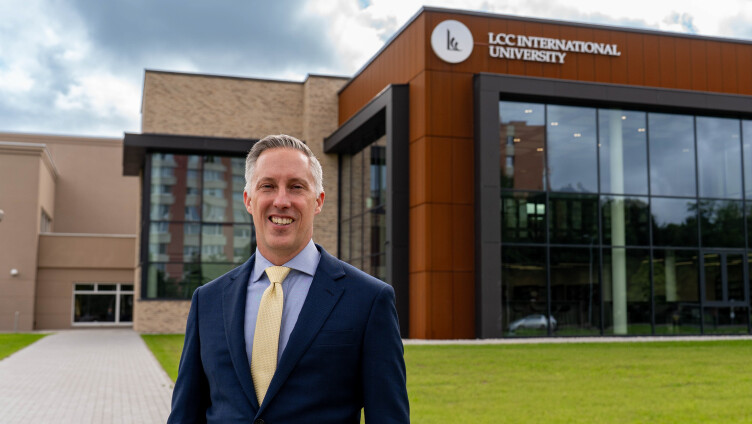
“Welcome from the President”

"Welcome to LCC International University. An LCC education is valuable – it offers opportunities to put theory into practice; it brings people together from many parts of the world to live and study and interact; it helps us discover how to live a life of faith. In community! At LCC we grow together as a learning community, we interact as a relational community, we celebrate our international community, and live lives of integrity as a Christ-centered community. Join our flourishing community of students, faculty and staff, friends and donors!"

a photo of person or place for the testimony

Marlene Wall, Ph.D.
President

President's Cabinet

Founding Board of Directors Members

Art DeFehr

Winnipeg, Manitoba, Canada

Otonas Balčiūnas

  Lynchburg, Virginia, USA  

Dennis Neumann

Abbotsford, British Columbia, Canada

Leona DeFehr

Winnipeg, Manitoba, Canada  

Raimonda Balčiūnas

Lynchburg, Virginia, USA

Rene Neumann

Abbotsford, British Columbia, Canada

Board of Directors Members

Roger Friesen – Chair

Executive VP/Business Development

Palliser Furniture Holdings Ltd.

East St. Paul, Manitoba, Canada

Jurgita Choromanskytė

Political Consultant, Lecturer
Klaipėda, Lithuania

Ausra Jakuboviene

Vice President, Transformation Office at Under Armour Inc

Severna Park, Maryland, USA

Andris Lanka

Owner, Valodu Vēstniecība

Liepāja, Latvia

Johann Matthies

Director, Multiply-MB Mission/Europe and Central Asia 

Horn-Bad Meinberg, Germany

Peter Tielmann

President, EQ3

East St. Paul, Manitoba, Canada

David Wallace

Chief Investment Officer, Pomona College

Claremont, California, USA


Cornelia Horsch – Vice Chair

HORSCH Maschinen GmbH

Schwandorf, Germany

Shawn Neumann

CBTW Co-Founder & Partner, Versett Partner

Abbotsford, British Columbia, Canada

Alexander Kharitonov

President, CCI/Russia
St. Petersburg, Russian Federation

Allon Lefever

President, AB Hospitality Company

Lancaster, Pennsylvania, USA

John Reynolds

President, LAPU

San Dimas, California, USA

Pär Lidaker

Owner, BJS Group AB

Bolmsö, Sweden

John McQuaig

McQuaig and Welk, PLLC CEO

Wenatchee, Washington, United States

Board Emeritus Members

  • Ed Buller

    Winnipeg, Manitoba, Canada

  • Hansuli Gerber

    Geneva, Switzerland

  • Bill Goff

    Rome, Georgia, USA

  • Howard Loewen

    Valencia, California, USA

  • Ron Mulder

    Holland, Michigan, USA

  • Myrl Nofziger

    Goshen, Indiana, USA

  • Ben Sprunger

    Nokomis, Florida, USA

  • Stanley Clark

    Emily, Minnesota, USA

  • Todd Gibson

    Seattle, Washington, USA

  • Bruce and Marianne Konrad

    Abbotsford, British Columbia, Canada

  • Russ and June Michealsen

    Santa Barbara, California, USA

  • Gerald Neufeld

    Delta, British Columbia, Canada

  • Ken Penner

    Winnipeg, Manitoba, Canada

  • Dwight Wyse

    Harrisonburg, Virginia, USA

Memberships & Associations

Collaborative Partner, Council for Christian Colleges & Universities

Affiliate Member, Consortium for Global Education

Member, International Network for Christian Higher Education

Member, European Association for International Education

Member, Lietuvos Anglų Kalbos Mokytojų Asociacija

Member, European Association of Institutional Research

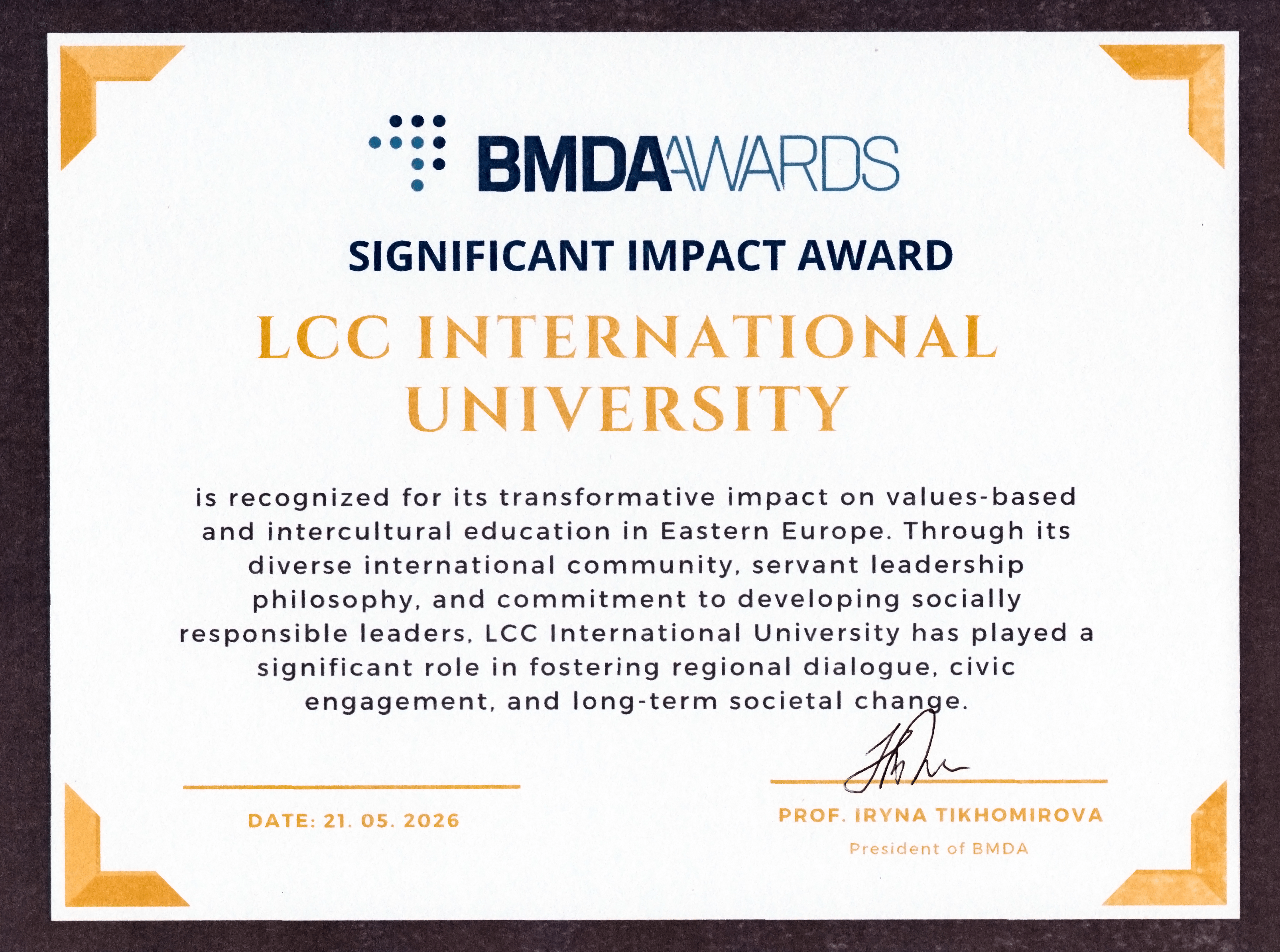
Member, Baltic Management Development Association

Member, Baltic University Programme

Member, United Nations Academic Impact

Christian Mission

Core values
  • We believe that a liberal arts education integrates learning with all aspects of life.
  • We affirm a Christian worldview that invites all people to grow in truth and restoration through the power of the Gospel of Jesus Christ.
  • We value community as a safe place where people are respected, affirmed, and empowered, so that their dignity is upheld.
  • We pursue relationships that are mutual, authentic, and based on trust.
  • We celebrate diversity of cultures and traditions, personalities and opinions.
Understanding LCC Christian mission

LCC is an ecumenical Christian university grounded in the historic Christian faith, and respectful of other religious traditions.  

Read about our mission >

Mission partners

See all >

Campus Tour

Venue rental

Looking for a venue to host a large event or accommodation for a large group?

Transformations

A monthly newsletter for friends, donors, faculty, staff and alumni. Energetic doze of news, perspectives, stories and facts that illustrate progress of our mission.

Annual report

Review our annual report archive, highlights of the year, facts numbers and stories!

Open archive

Contact Us

President’s office
Corporate Communication
Faculty and Staff Recruitment